


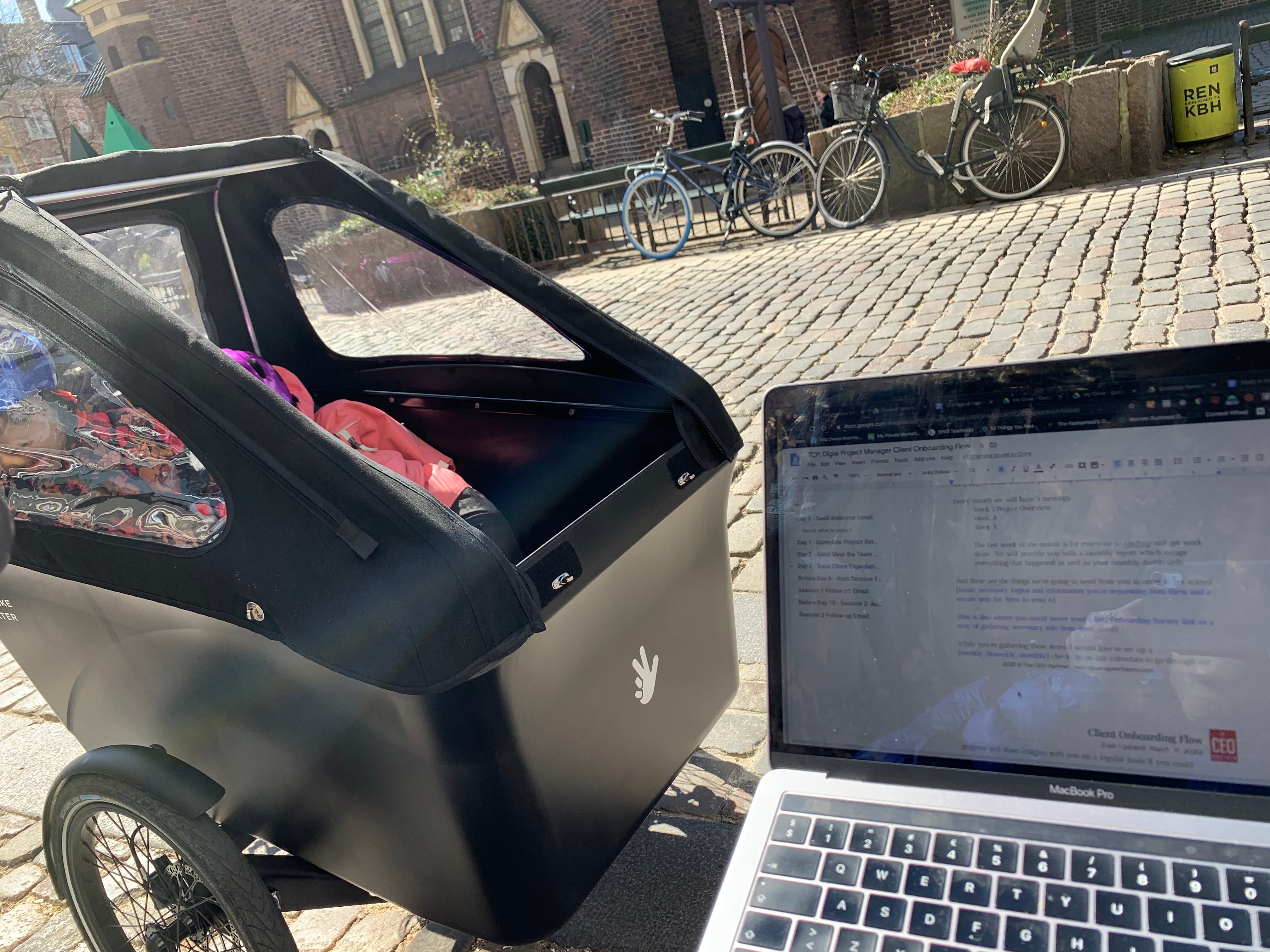
In July I work about 10 hours a week across all four of my clients, and my kids are home from school. In September and October I work 50 to 60 hours a week, and my calendar belongs to my clients. It is the same business and clients.
Most of what I read about running a business says you have to pick one of those two lives.
Either you build a business that holds at 15 hours a week forever, or you give it everything you have, all year, and let your health and your family pay for it. I tried the second one for a long time, and it is not sustainable.
What I run now is a mixture of both, and I plan every month of it.
What a year of my hours looks like
A regular month for me is 15 to 20 hours a week of client work across all clients, and that is the number I plan around. When a client launches, I add about 10 hours a week for each client who is launching. On top of that, two or three short-term projects run at a time (managed by the team) which adds about 10 more hours of my attention in a week. Stack a few of those together and I am past 40 hours, usually 50 to 60. That is more than a corporate job asks of most people.
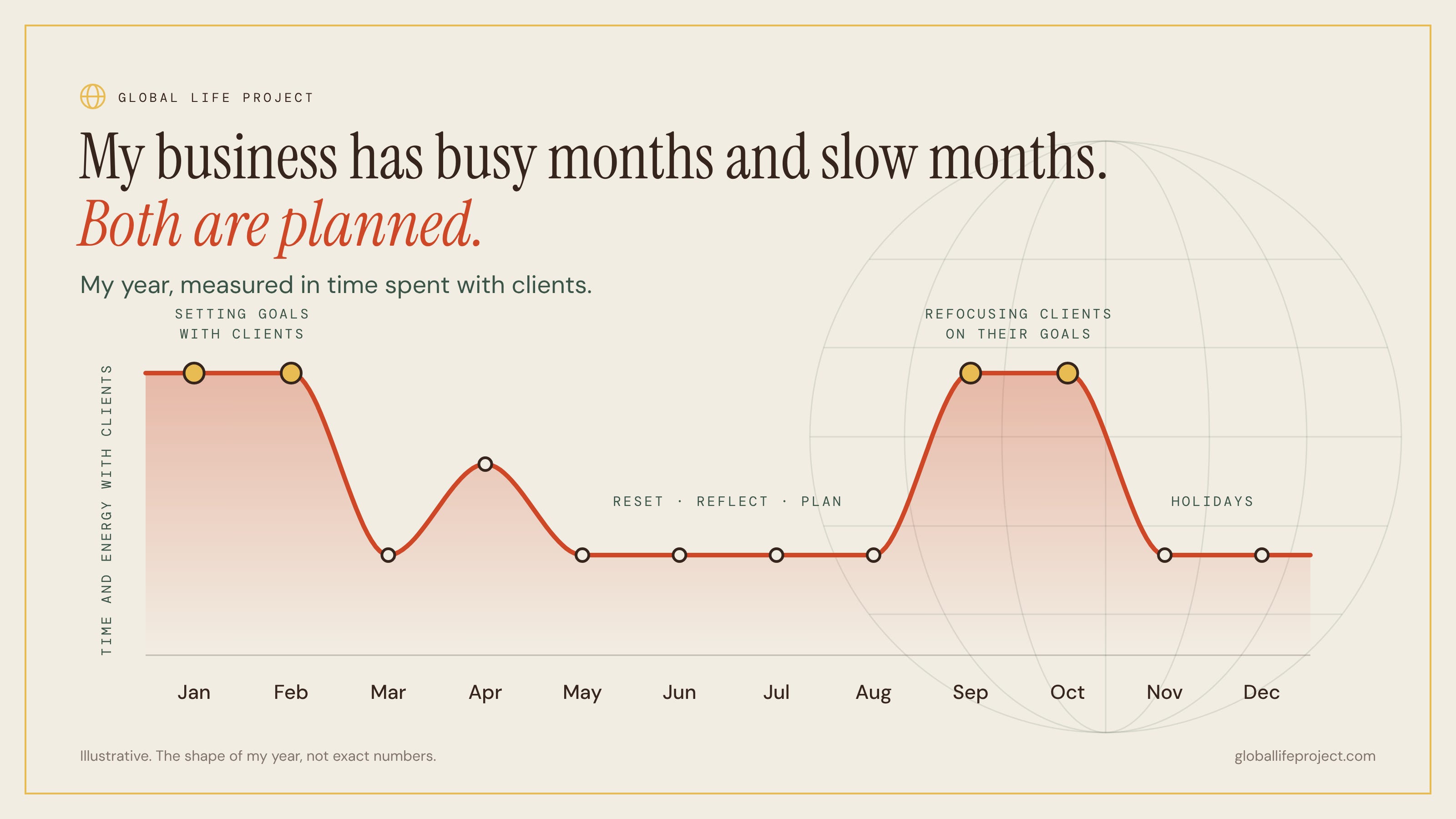
The busy months sit where my clients’ own years peak, at the start when everyone has high hopes for the year and again in the fall when the goals from January are still unmet. The slow months sit where their downtime does, in summer and over the holidays, and that is when I am home and present with my kids. I take the last two weeks of the year off.
How I work with clients
My main work is fractional COO. A client signs an annual contract at $5,000 to $7,500 a month, which puts a contract at $60,000+ a year, and renews in November or December for the following year. By the time January starts, most of my year is already secured.
Inside each business we run the CEO OS, the CEO Operating System, the framework my team and I use to build a profitable, sustainable business model around the person running it.
It has three layers and nine pillars, with an AI layer that runs through all three. We work through the layers in order, because each one requires the one beneath it.
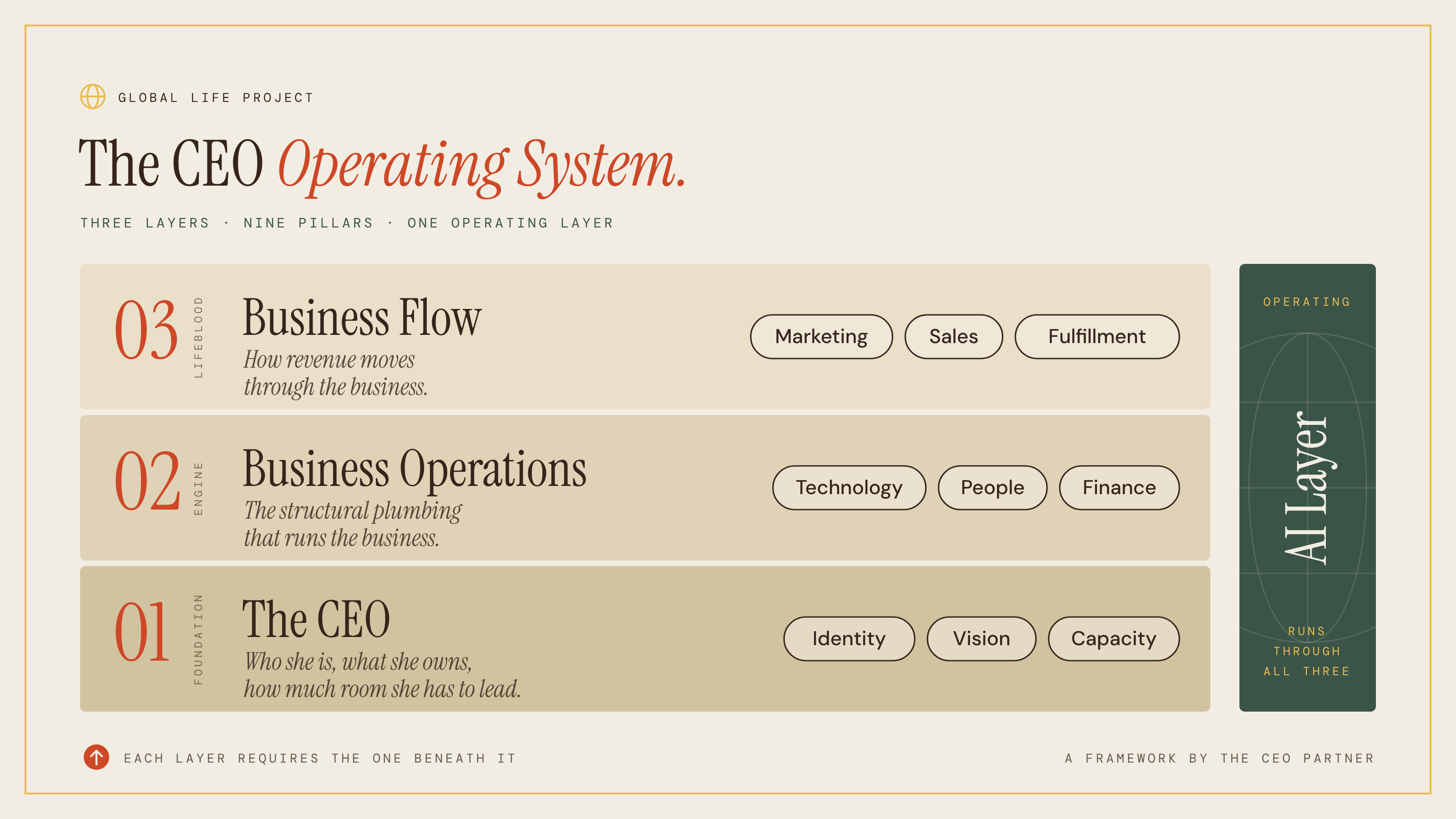
The first layer is The CEO, the foundation. Its pillars are identity, vision, and capacity, which cover who you are, what you own, and how much room you have to lead. We start there because nothing we build later sticks while the person at the top is still holding everything up.
The second layer is Business Operations, the engine and the structural plumbing that runs the business. Its pillars are technology, people, and finance.
The third layer is Business Flow, the lifeblood, which is how revenue moves through the business. Its pillars are marketing, sales, and fulfillment. The launches that fill my busiest months come out of this layer.
The AI layer touches every pillar. Alongside the retainers we take on AI implementation projects that run 60 to 90 days. This is where we automate the manual processes a client uses every day, update the systems to improve the client experience and give the CEO & their teams hours back.
A lean team that gets paid for the work it does
My team is three people and me. A Technology Implementation Manager runs every system implementation on our client projects, a Project Manager keeps the work moving, and a Client Success Lead stays close to our clients. Everyone is a contractor and gets paid for the hours they work. A bloated team raises your expenses, and high expenses are what make any business hard to carry.
The contractor model also allows me to decide how we use the slow months. We save the systems updates and the maintenance work on client businesses for the summer and the other quiet moments, because during launches and new implementations nobody has the capacity for it. The team keeps earning, clients come out of the slow season with cleaner processes, and the busy months stay free for the work that needs them.
The client who planned her maternity leave
A client was going on maternity leave, and she wanted that time off with her kids. Before she left, we ran sales events and launches so the revenue came in ahead of time. That revenue carried her through her leave, and she did not have to wake up with a newborn and work through the day to keep the business going.
We do this with clients all the time, and it is the same move I make for my own summers. The revenue comes in before the slow stretch begins, so the slow stretch can be used intentionally.
You can have both
The story most founders hear is that a business is either a 15-hour-week business forever or a business that takes everything you have, all year. I lived the all-year version for a long time, and what I run now is a mixture of both. Some months you will work more than you did in a corporate job, for me that means 50 to 60 hours a week. That pace holds for a few months and then it stops. Owning the business gives you the freedom to decide where the heavy months fall and where the light ones go. I put mine around goal setting in the winter and the fall, and around my kids’ summer.
Planning is what makes that possible. You need to know what your slow months cost before you reach them, which means your expenses, your own pay, and your team’s pay, and you need the revenue secured while the work is still busy.
For me that happens in November and December, when a year of contracts renews, so the year ahead is largely paid for before the first launch of January. In the CEO Operating System this work touches three pillars at once: capacity in The CEO layer, finance in Business Operations, and sales in Business Flow.
For paid subscribers I built a planning calculator, the Seasons Planner. You enter your full business expenses, your own pay, and your team’s pay, and it tells you what you need to bring in this year, how many contracts that takes at your average contract value, and how much you already have secured.
Below the line I walk through the four ways I secure a year of revenue early. I put them on a calendar so you know which one to work on in which month. It is built to move your selling out of your busy months, so the weeks you want back stay yours.