


When we told Mia we were moving to Doha, she was in Year 3, and she took the news the way an eight-year-old takes something she doesn’t have the power to change. Quietly, and then not quietly at all.
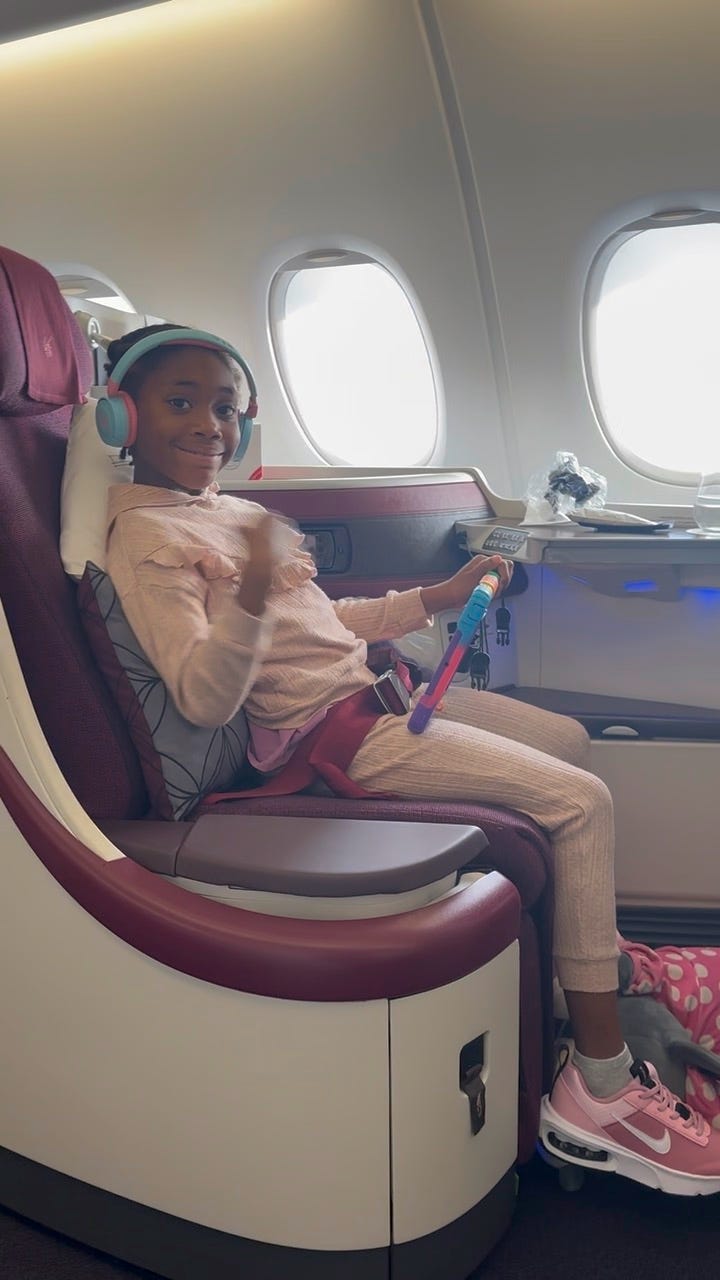
She’d already lived in two countries by then, Denmark and the UK, and now this. Elise, 22 months younger, moved the way younger siblings often do, following the current.
But Mia has always been the one who holds on. She’s the child who wants the playdate scheduled before we’ve even landed in the UK for a visit, who asks about her cousins by name, who treats a friendship like something you tend, not something that just happens to you.
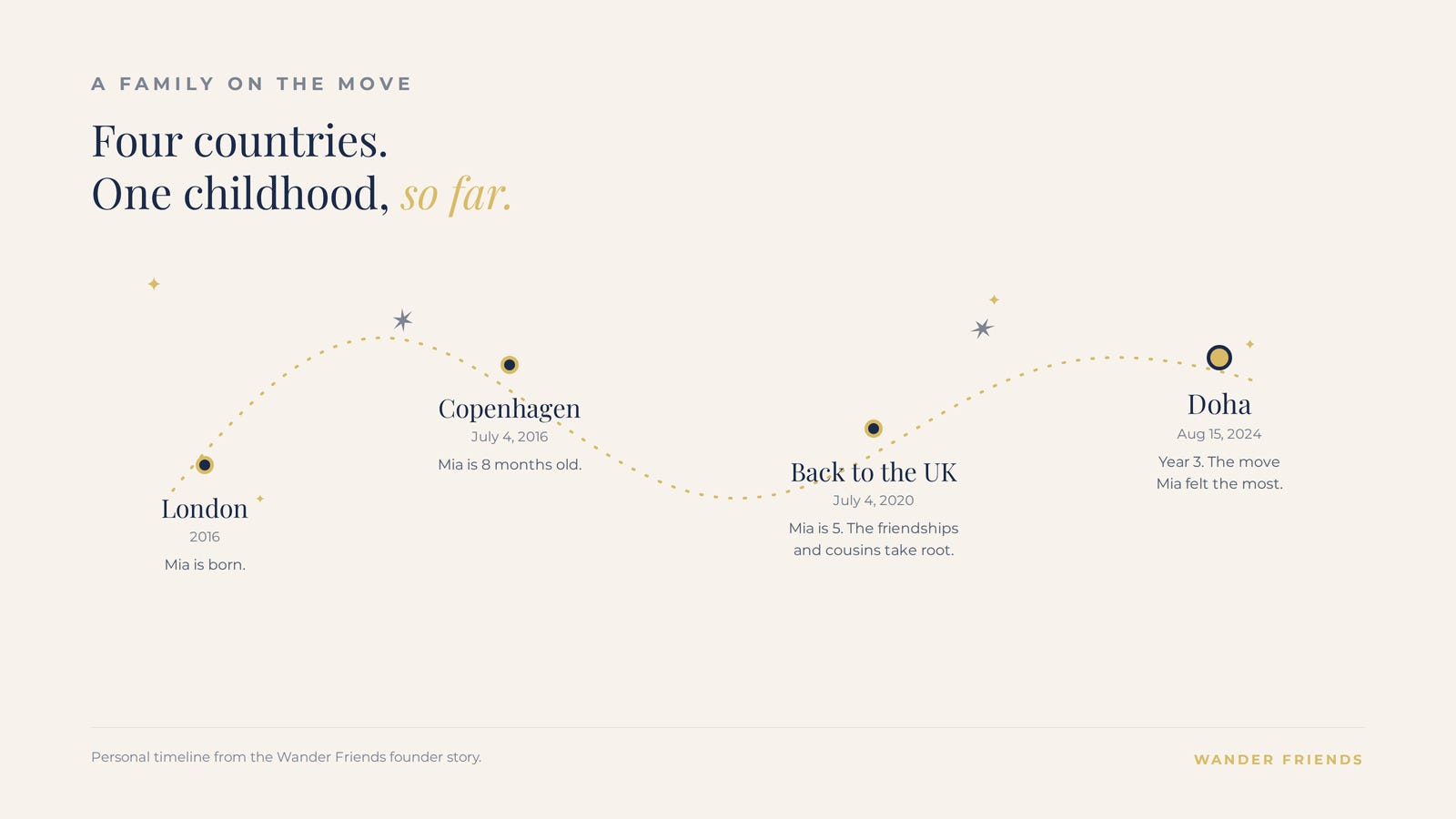
I didn’t understand how much that mattered until 3rd grade specifically.
That’s when I started noticing it, kids that age stop treating friendship as background noise and start treating it as something they actually value. So when we packed up for Doha, we weren’t just moving her away from a house and a school.
We were moving her away from her cousins, the ones she was closest to, and from the specific friends she’d built a life around in the UK.
We knew we had to be intentional, every trip back had to include time with the friends she’d missed, not just family.

What we didn’t have was a good way for her to stay connected in between those visits.
She uses Messenger on her iPad now, and I’ll be honest about what that actually looks like day to day. It’s not the safest thing I could give her, and I know it. I check it when I remember to, usually about once a week, and I’m constantly asking her who she’s talking to, whether it’s someone from school, a cousin, someone I don’t recognize.
That’s not a system. And I live for a good system.
That’s me hoping I don’t miss something.
Why Year 3 is exactly when this starts to matter
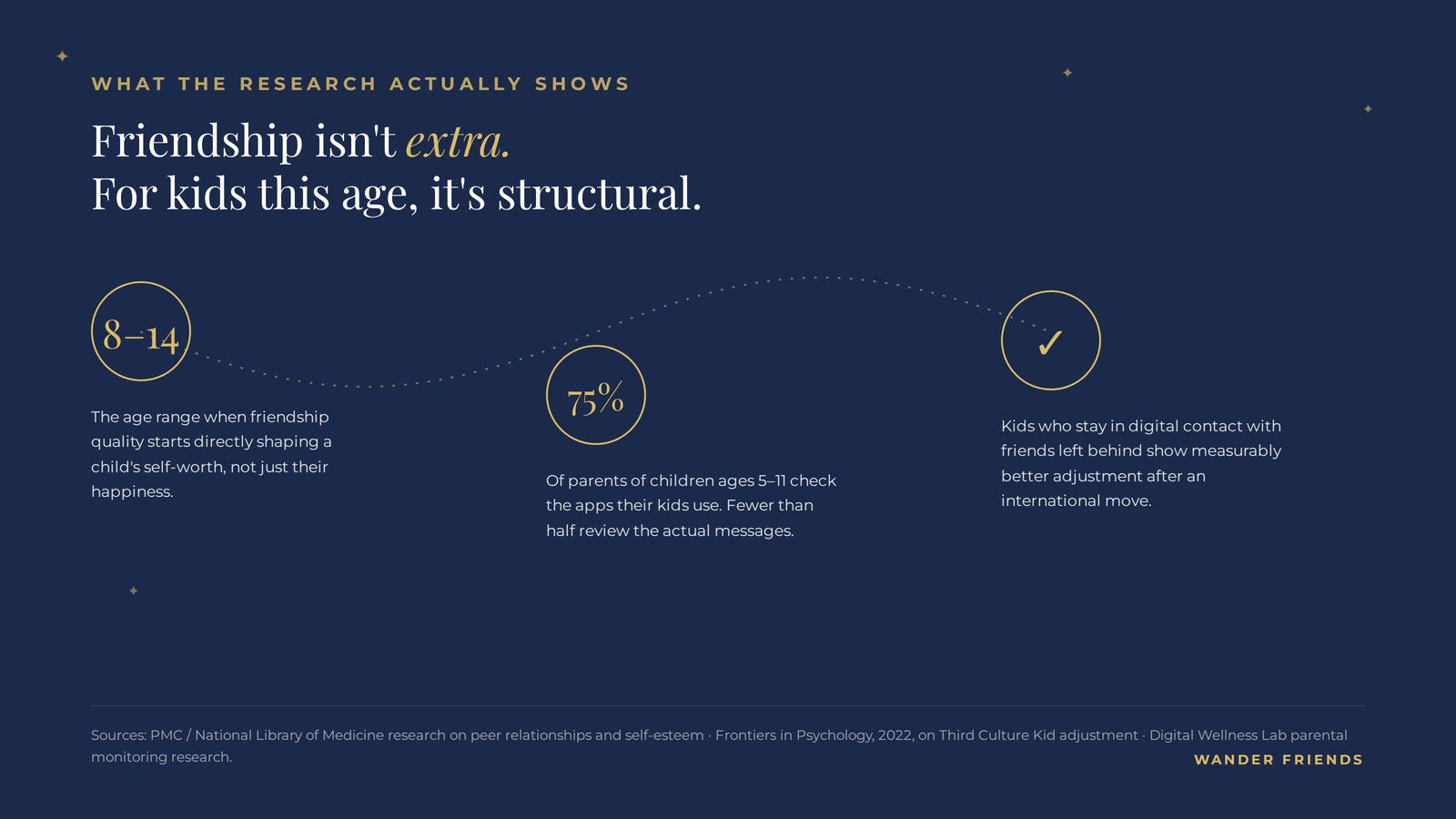
It turns out what I was noticing in Mia has a name in the research. Middle childhood, roughly ages eight to fourteen, is when peer relationships start becoming central to how a child sees herself. Children with strong, trusted friendships at this age report meaningfully higher self-worth, and the effect isn’t just about having friends, it’s specifically about having good ones, the kind built on trust and low conflict, not just proximity.
For a child who’s also moving countries, the stakes go up again. Kids who live outside their home country during these years, researchers call them Third Culture Kids, adjust better when they keep real contact with the friends and family they’ve left behind.
One study found that children who stayed in touch through video calls and messaging showed measurably better adjustment and less culture shock than those who didn’t.
Losing touch isn’t just sad. It’s a real, researched risk factor for how well a child settles into a new place.
And the way parents stay involved matters too. For kids in this age range, research consistently shows that transparent oversight, the kind where the child knows what’s visible and why, is better received and more protective than either secret surveillance or no oversight at all. Kids this age aren’t ready for fully private messaging, and they don’t actually want it the way we sometimes assume they do.
They want to feel safe, not watched.
What this means for what we’re building
I didn’t set out to build an app because of a research paper. I built it because I was tired of hoping I remembered to check Messenger, and because Mia deserved a better way to hold onto the people who mattered to her.
Wander Friends is a messaging app built specifically for this: kids whose closest friendships now live in a different country, with parents who want to see the full picture, not just get a warning after something’s already gone wrong.
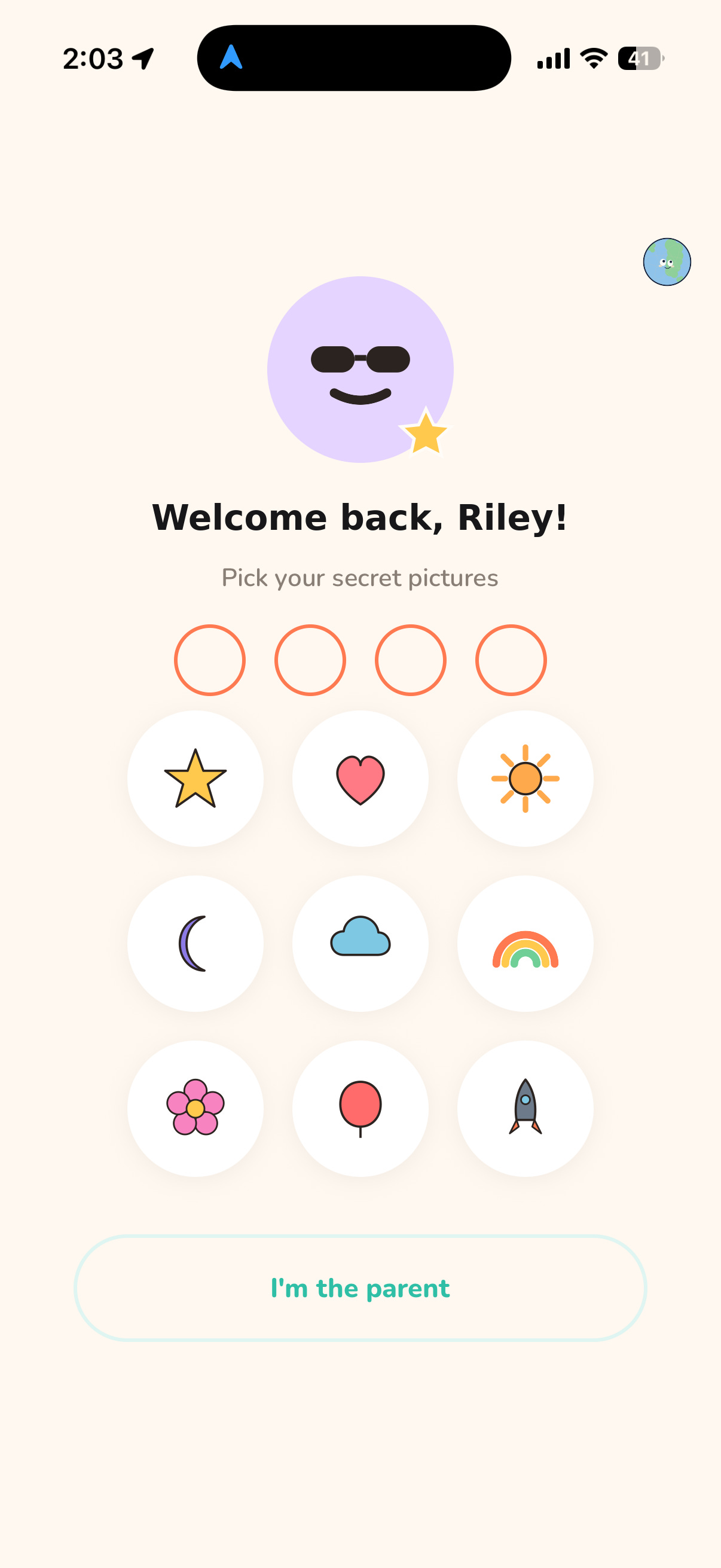
Every contact is approved before a single message is sent. Every conversation stays visible, always, not something I have to remember to go check.
We’re opening this up to a small group of families this year.
If this sounds like your house too, whether it’s a move like ours or just a friend who moved away, I’d love for you to join the beta testing.
Sources referenced in this piece:
Friendship quality and self-worth in middle childhood: PMC (National Library of Medicine), Journal of Child Psychology research on peer relationships and self-esteem
Third Culture Kid adjustment and digital contact with home-country friends: Frontiers in Psychology, 2022; PMC research on sociocultural adjustment
Parental monitoring and transparency by age: Digital Wellness Lab research briefs; American Academy of Pediatrics guidance on balancing online safety and independence by age