



There is a version of Doha that exists on the internet.
It is gleaming towers, tax-free income, world-class infrastructure, and a cost of living that make London feel like a financial emergency. The weather is warm. The city is extremely safe. The visa process, for the right profile, is straightforward.
That version of Doha is accurate.
It is also completely useless as a decision making tool.
Because the version that matters… the one that determines whether a place actually works for your life is the one that answers different questions entirely.
What is it like to raise children there?
What happens when your daughter needs a speech therapist, and you can’t easily find one who works in English?
What does it feel like to be an only child whose mother is in the United States, and to realise that “direct flights home” is not a preference, it is a non-negotiable that should have been mapped before you ever looked at a floor plan?
That’s what Lifestyle Requirements means. Not the highlights. The operational reality of daily life in a specific place for a specific family.
Most people skip it. And most people pay for that later.
The mistake everyone makes in Phase 2: Direction.
When someone decides to move abroad and when they have done the work of Phase 1, examined their non-negotiables, assessed their risk capacity, and confirmed their family’s alignment, the first thing most of them do is start looking at places.
They research cities.
They watch YouTube videos of expats walking through neighbourhoods.
They join Facebook groups, read Reddit threads, and build spreadsheets comparing the cost of living across six countries.
That is not Lifestyle Requirements work. That is tourism research wearing a strategic costume.
Lifestyle Requirements is a discipline entirely different from the others. It begins with a question that most location research never asks:
What does your daily life actually need to have for it to feel exciting, but for it to actually function?
Not your life on holiday.
Not your life for a three-month experiment.
Your life. Running your business, managing your health, raising your children, staying close to the people who matter, managing the logistics of a real household in a foreign country where you do not yet speak the language or know which doctor to call at 11 pm.
That’s the version of your life that Lifestyle Requirements is built to protect.
What I didn’t map before Copenhagen.
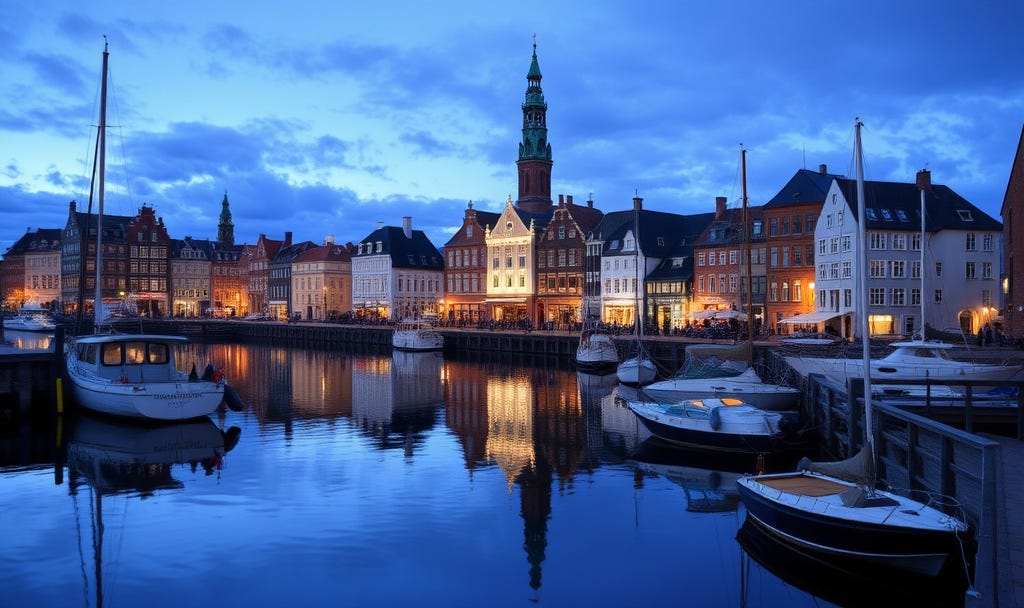
In 2016, we moved to Copenhagen with an eight-month-old and a business I had been running since 2011. We had done the research. The city was beautiful, safe, progressive, and family-friendly. On paper, it worked.
What I did not map properly was the linguistic reality of raising a bilingual child, and what that would cost her when we moved back.
We left Copenhagen when my older daughter was struggling to speak English or Danish clearly. The transition worked its way into her experience in ways that took time to repair. That outcome was not the result of a bad decision to move. It was the result of an incomplete Lifestyle Requirements assessment. One that treated education as a checkbox rather than a layered operational question.
What school system?
What language of instruction?
What are the transitions in and out?
What happens developmentally when the plan changes… and plans always do?
Those are Lifestyle Requirements questions. I know that now because I didn’t ask them rigorously enough the first time.
What does this pillar actually cover?
In Phase 2 of the Global Citizens Framework, Lifestyle Requirements is the first pillar you work through after the Phase 1 decision is made.
The definition is precise:
Assessing daily operational needs beyond the tourist version of a location.
The keyword is operational. Not experiential. Not aesthetic. Operational.
That means working through every domain of your actual life and asking what it requires, not what you’d like, but what you need it to contain for the move to be sustainable past the initial excitement.
Education. Not just “are there good schools?” but what is the transition plan if you move again, what language environment does your children need at their specific developmental stage, what happens if they need additional learning support?
Healthcare. Not just “is there a hospital?” but what are your family’s specific medical needs, whether those can be met in the places you are considering, what your coverage looks like across borders, and what your contingency is if something goes wrong.
Community. Not just “are there expats there?” but what kind of community does your family need to thrive, whether that exists in your destination, and how long it realistically takes to build it from scratch when you arrive not knowing anyone.
Language. Not just whether locals speak English, but should your children can be educated in it, whether you can operate your business in it, and whether you can read a contract or navigate a bureaucratic process without a translator.
Family proximity. This one almost never appears on relocation research lists. It is one of the most consequential Lifestyle Requirements for anyone who has ageing parents, children who need grandparent involvement, or family members who depend on their physical presence.
I am an only child. My mother is in the United States. Direct flights back to the US from wherever I live are not a preference. They are a hard requirement, and they have shaped every location decision I have made since 2015. Doha works for this. Some other destinations that looked attractive on paper turned out not to be. That filter eliminated entire options before we ever looked at the real estate.
That is what Lifestyle Requirements mapping does. It eliminates the wrong answers before you fall in love with them.
The tourist version versus the operational version
Every city has a tourist version and an operational version. They are sometimes the same. More often, they are not.
The tourist version is what you experience when you visit for a week. The streets are charming, the food is excellent, the locals are friendly, and the evening light is extraordinary. You think: I could live here.
The operational version is what you experience when you actually live there. The charming streets flood when it rains. The excellent food involves a forty-minute commute to the only supermarket that stocks what you need. The friendly locals are friendly, but your children’s school has a two-year waiting list, and the one they can access does not teach in English.
I have visited places I thought I could live in, only to discover, on closer examination, that they did not meet my family’s Lifestyle Requirements at all. I have also dismissed places that looked difficult from the outside and then, through proper research, discovered that they worked precisely because of how specific our lives are structured.
This framework is not a recommendation engine. It does not tell you where to go. It builds the precision required to know what you actually need and then tests the places you are considering against that standard.
What does mapping your Lifestyle Requirements actually involve?
This is not a weekend exercise. It is a structured assessment that you work through with your real life in front of you not a fantasy version of it.
It starts with a complete inventory: every domain of your daily life, every person whose needs must be accounted for, every operational requirement a destination must meet. Not preferences. Requirements.
Then you stress-test the destinations you are considering against that inventory. Not with optimism but with rigor.
You look for the gaps.
You ask what happens when something goes wrong.
You find out what your contingency is if the thing you are counting on is not available, and you decide in advance whether that risk is acceptable.
The places that survive that process are the ones worth pursuing. The ones that don’t, no matter how beautiful the Instagram content, are the ones you remove from consideration before you make a decision you will spend years recovering from.
Why do most people skip this?
Lifestyle Requirements work is slower and less exciting than city Instagram research. It requires you to think carefully about your actual life rather than the aspirational version of it.
It surfaces constraints you would rather not confront.
It sometimes rules out the place you wanted to move to.
That discomfort is the point.
The global decision is consequential.
It affects your children’s education, your business operations, your family relationships, your mental health, and your financial stability.
The people who move with confidence and land well are not the ones who found the most inspiring destination. They are the ones who did the operational work before they fell in love with a place.
Lifestyle Requirements is that work.
The Roundtable is where this gets applied
If what you’ve read here is starting to surface questions about your own situation, about what your life actually requires and whether your destination can meet those requirements > the Global Citizens Roundtable is where that work begins.
It’s a free live conversation. No pitch. No package at the end. Just the framework applied to real situations, including yours.
We work through the questions together. You leave with more clarity than you arrived with.
The next Roundtable is coming up this week.
It’s free. It’s live. And it’s for the people who’ve decided that this decision is worth making properly.